Showing posts with label book review. Show all posts

Friday, 18 May 2018

Practical Guide to Truffles (Book Review)

I don't know much about truffles. I've eaten some dishes containing truffles, but that's about it. However I've always been a bit curious about them, given all the fuss that people make, and recently I had the opportunity to learn a bit more.


On a recent trip to the South West of France, I chanced upon this slim volume in the gift shop of the Chateau of Monbazillac. It is well-written, informative and unpretentious, and I strongly recommend it to anyone wanting to learn more about truffles It's definitely worth reading if you are planning to spend your money on them.

A few interesting things which I have learnt:

There are several species of truffles, of which only two are of gastronomic interest: the black Périgord  truffle (Tuber melanosporum), and the white Alba truffle (Tuber magnatum).


Other species are either not very interesting, i.e. not very aromatic, or even unpleasant. This is worth knowing as an ill-informed buyer could end up paying a lot of money for something of no value.

Black and white truffles are quite different in the way they should be prepared.

Black truffles may be fresh, or preserved. Fresh truffles do not last for long: not more than a week when carefully packed stored in a refrigerator. So if you have spent a wad of cash on your fresh truffle (hopefully Tuber melanosporum and not one of the inferior or nasty varieties), you should prepare it and eat it immediately. Preserved truffles, it should be noted, are in no way inferior, merely different. The book describes the dishes for which each type is most appropriate.

It has become fashionable to shave raw truffles over food, but this practice, I have now learnt, is only appropriate for the white Alba truffle, because the black Tuber melanosporum only releases its aroma at 40C, so shaving a raw black truffles over your pasta is a complete waste. The Alba truffle, on the other hand, does not stand up to cooking, and should only be consumed raw, as a condiment, so if you have one of those, shave away.

As for truffle oil, this is neutral vegetable oil to which synthetic truffle aroma has been added. The ingredient was discovered in the 1980s in the course of biological research into truffles, and is identical to its 'natural' counterpart, in that it is exactly the same chemical. If you see something in your bottle of truffle oil that looks like a piece of truffle, it's just there as an ornament, or to mislead the customer, and does not contribute to the flavour or aroma. It might even shorted the shelf life of the oil if it degrades more rapidly. For more information on truffle oil, there's an interesting article in Wikipedia.

There's lots more in the book about the history, biology, selection, purchase, preservation, preparation and cooking of truffles, all written in an easy-to-read and engaging style. I now appreciate that its worth learning a bit about them before seeking them out in order to avoid disappointment. This book concerns itself almost exclusively with Tuber melanosporum, so I think that anyone wanting to go into the Italian Alba truffles should probably look for a similar sort of book on the topic.

Practical Guide to Truffles - Truffle is a simple product
Pierre-Jean & Babeth Pébeyre, Sophie Brissaud
Féret . Published 21/03/2014
http://www.feret.com/livres-gourmands/practical-guide-to-truffles.html

New edition (in French)
Manuel de la truffe, nouvelle édition - La truffe est un produit simple
Auteur : Pierre-Jean et Babeth Pébeyre, Sophie Brissaud
Date de publication : 15/11/2016
http://www.feret.com/livres-gourmands/manuel-de-la-truffe-nouvelle-edition.html

Friday, 26 August 2016

Book review: Voyage Le Corbusier: drawing on the road, by Jacob Brillhart.

The drawings that Le Corbusier made on his travels. 

Ever since I first came across my father’s copies of Le Corbusier’s books Towards a New Architecture, and The Home of Man, I have been an admirer of Le Corbusier’s drawings, and the way he managed to illustrate a point about architecture or town planning with a few simple lines.

In his youth, after graduating from high school, the young Pierre Jeanneret (as he was then known – the name Le Corbusier was adopted later) undertook a series of journeys across Europe, which he documented exhaustively with drawings and watercolours. This was a formative period in his education. He never studied architecture at a university, and when he set out on his travels he had not yet decided whether he wanted to be an artist or an architect. Towards the end, he had made up his mind.

This beautifully illustrated book charts his development through these trips through his drawings and sketches.


The author is an architect, who had previously used Le Corbusier’s journeys as a basis for his own trips, and he has assembled a chronologically arranged selection of drawings that Le Corbusier made on his travels.

The book will be of interest Corb fans of course. But it will also appeal to those who enjoy drawing buildings and the urban environment, even those who are not especially interested in Corbusier, or indeed modern architecture.

This is not a book about how to draw buildings and cityscapes, although it does discuss the materials and techniques used by Le Corbusier. But it is a book which illustrates how the process of drawing is something which we can use to help us learn to see the and understand the world around us, and in the conclusion, the author urges the reader to pick up a pencil and start drawing.  For those who enjoy such activities, or might like to, it’s an inspiring book. By showing a selection of pictures produced over time by the same artist, the author has illustrated several points.

To Le Corbusier, drawing was a means of exploring and analysing the things he saw. The pictures and the commentary illustrate how he often made several drawings of the same building or place, each one depicting a different aspect which he wanted to show.

This drawing is about the surface decoration on the capital of a column in the church of San Vitale in Ravenna. The carving is shown in great detail. The rest of the building is shown, but in less detail.


These drawings of the Doge's Palace in Venice depict the characteristic Venetian gothic windows, but they are also about the relationship between ornament and structure, and show the way the stonework fits together.


This drawing shows the Baptistery at Pisa, and is about the relationship of the buildings to each other.


This earlier drawing of the Baptistery, on the other hand, is about the surface detail.


We see how Le Corbusier was able to deploy a whole range of techniques, depending on what it was he wanted to show, as illustrated by these two pictures of Notre Dame in Paris, made during the same trip.


The later drawings are less detailed, emphasising the buildings as volumes in relationship to one another, with less emphasis on surface detail. Drawings like this are generally more familiar, many of them having been used to illustrate his books.


However, behind that simplicity was a high level of technical skill, as his earlier works attest.

Voyage Le Corbusier: drawing on the road.
Jacob Brillhart

W.W. Norton, Feb 2016
Hardcover
ISBN 978-0-393-73356-3
7.6 × 9.6 in / 192 pages
Publisher's site
Amazon UK
Amazon US 


Friday, 3 June 2016

Book review: The Ministry of Nostalgia and The Lubetkin Legacy

By chance, I recently came across two books, one factual, and the other a work of fiction, which complemented each other very nicely

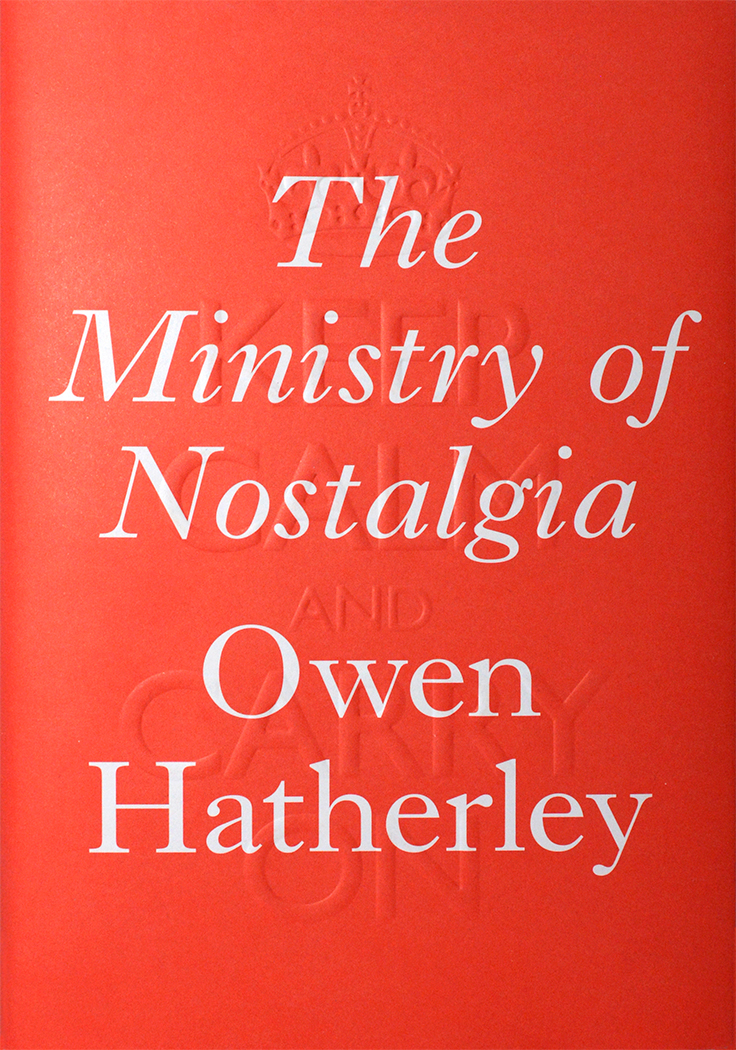
Owen Hatherley's The Ministry of Nostalgia is a critique of the recent phenomenon of “austerity chic’, of the way in which the history of 1940s and 1950s Britain has been rewritten and distorted in order to justify or cover up the neo-liberal ideology which dominates contemporary Britain.


The recent popularity of the aesthetics and design of the 1940s and 1950s is evident everywhere: from posters of the Festival of Britain,  to mid century modern furniture and architecture, vintage clothing, and that ubiquitous “Keep Calm and Carry On poster. The post war period was of course the time when the National Health Service was established, along with the welfare state, and a large programme of public housing. Since the Thatcher period, all of this has been gradually dismantled. Council housing sold off, the NHS eroded and gradually privatised, and the gap between rich and poor getting wider.  All this is symbolised by the “Keep Calm and Carry On” poster, from a wartime design which was intended to be used in the event of a German invasion, but never actually produced in large numbers until 2008, during the time of the credit crunch, and embossed on the dustcover of the hardback book.

This quasi-blitz spirit, this pseudo-nostalgia for an imagined past age of austerity, when “we were all in it together”, serves to obscure the realities of the current neo-liberal economic climate, in which the oligarchs run the show, and everyone else is urged to be frugal. Nowadays, council house construction has ceased, and affordable housing is in increasingly short supply, but privately-owned ex-council flats, built to a much higher standard than recent privately constructed housing, are seen as desirable purchases. Some apartment blocks, like Goldfinger’s Balfron Tower, are being socially cleansed of their tenants by private developers before being refurbished as luxury apartments.

Hatherley ranges widely across the politics, design, art, architecture and music. I was familiar with some of the references, like Jamie Oliver's cooking, the Chap magazine, and Ken Loach's film, The Spirit of '45. Others, like Alexandra Harris's book Romantic Moderns,  which he discusses in detail, I had not encountered, so I found some of his critique a little difficult to evaluate.

I must confess though, that I do find a lot of the products of “austerity chic’ quite attractive or amusing, including some which he specifically mentions. I have from time to time read the Chap magazine, that publication which “launched a thousand East end moustaches”, including, I suppose, my own. But it’s good to be reminded of the link between aesthetics and ideology, so as not to be seduced by the ideology while admiring the aesthetics.

Which brings me to the other book, The Lubetkin Legacy by Marina Lewycka, which I have just finished listening to as an audiobook. This is a hilarious, comic novel centred around a block of council flats built by the famous architect Berthold Lubetkin.


Lubetkin, incidentally, is the architect responsible for Finsbury Health Centre, which I wrote about in a previous post. The protagonist, Berthold Sidebottom, an out-of work actor lives in one of them with his widowed mother, who maintains that he is the love child of the architect, after whom he is named. When she dies, his continued occupancy of the flat is imperilled. There are a host of other characters, like Violet who finds that her new corporate job leads her into the world of murky finance, a mysterious old Ukranian lady he meets in hospital, and many more. The novel deals with issues like social deprivation, housing shortages, the post-war consensus, bedroom tax, homelessness, money laundering, racism, zero-hours contracts, and much more.

I see a lot of online rants these days, and even though the writers might express views which accord with my own, I suspect that they do little to influence those with different opinions. The Lubetkin Legacy does make a lot of political points, but in a gentle, sympathetic and humane way, which makes it all the more effective. Quite apart from all that, I found it an engrossing, funny and entertaining tale, which kept my attention and interest right through to the end. The version I listened to was by Audible, narrated engagingly by Toby Longworth, whose reading added an extra element of enjoyment, and I recommend it wholeheartedly.

The Ministry of Nostalgia: Consuming Austerity
by Owen Hatherley
https://www.versobooks.com/books/2032-the-ministry-of-nostalgia

The Lubetkin Legacy
by Marina Lewycka
https://www.penguin.co.uk/books/176201/the-lubetkin-legacy/
Audiobook by Audible

Friday, 22 April 2016

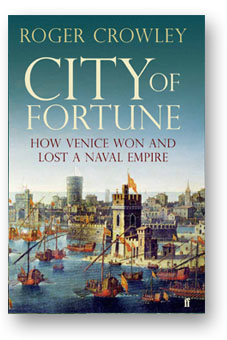
Book Review: City of Fortune: How Venice won and lost a naval empire, by Roger Crowley

A well-written and engrossing account of the rise and decline of the Venetian empire
As this year’s birthday present from my wife, I will be receiving in the post one book every month from Daunt Books, selected personally by their staff, based on the things that interest me. The first book to arrive was City of Fortune, by Roger Crowley, the story of “How Venice won and lost a naval empire”
Venice grew from a small settlement built on marshy islands in a lagoon, to become a wealthy trading city, controlling much of the trade between East and West. This was inextricably linked with sea power, and Venice was in the middle ages the greatest naval power in Europe and the Mediterranean. There are lots of books about Venice, but I don't know of any other popular (i.e. non-academic) histories that tell the story of the Venetian maritime empire.
The book covers the period from around 1000 to around 1500. In the early years, the Venetians subdued the pirates around the Adriatic and became the dominant naval power in their area. Then in the early 1200s they got involved in the notorious Fourth Crusade, when they were engaged to transport the crusaders to the Holy Land. As part of the deal, they stopped along the way of to reassert their authority over their possessions in the Adriatic. As a result of various intrigues, involving rival claimants to the Byzantine throne, the crusader force ended up at Constantinople, at that time the greatest and richest Christian city on earth. Constantinople was attacked, sacked and plundered in 1204. The crusaders never made it to Jerusalem. The Byzantine Empire was fatally weakened, while Venice became rich on the loot, acquired more colonies, and became even more powerful.
It goes on to tell the story of how the Venetians overcame other rivals in the Mediterranean, notably the Genoese, who came close to conquering and occupying Venice itself. Ultimately Venice triumphed. Although the Genoese were more than a match for them militarily, the Venetian state was better organised and more stable, which made all the difference in the long run. Then the Ottoman Turks became the dominant power in the Mediterranean and by the 1500s, the days of Venetian naval supremacy were over. Venice would still be prosperous for many years, until Napoleon invaded in 1797, but the days of glory were over, and the slow decline had begun.
The book is written in a fast-paced style, at times almost like a novel, and I found it an easy and entertaining read. Incidentally, although it might look like a naval history, it's aimed at the general reader, not the naval enthusiast. There were several things about it which made an impression on me. 
I had known the story of the Fourth Crusade in outline. The Venetians were at that time the only people with the resources to transport a large crusader force by sea across the Mediterranean However I had not appreciated the extent to which for Venice it had been such a high-risk undertaking. More or less the entire economy of the Republic had to be diverted towards the enterprise.
I knew of the Venetian possessions in the Mediterranean, which even today have Venetian buildings and clock towers, and which display the winged lion of St Mark, the emblem of Venice. However, I had not appreciated how badly the local inhabitants in their colonies were treated. We are often told how, compared to the chaotic despotism elsewhere in Italy, Venice was a model of enlightened good government (for that time). This did not apply in their colonies, which were regarded as purely economic and military resources. In their colony of Crete, the Venetians were hated by the locals. There were frequent revolts, which were put down harshly.
We live in troubled times today, with unpleasant conflicts around the world, in which innocent civilians are bombed and killed. Reading this book reminded me that things in the past were much worse. They may not have had the means to wreak death and destruction on a massive industrial scale as we do today, but they were pretty horrid. Wholesale massacres seem to have been the norm during warfare. Torture was accepted as routine. Prisoners captured by the Turks might be impaled or sawn in half. Turkish pirate chiefs who were captured by the Venetians were roasted alive at the end of an oar.
We might talk of cut-throat business practices, but this was often literally true for merchants in the middle ages. Life for them could be dangerous, with the constant threat of piracy at sea, periodic fights between merchants from different countries, and the risk of imprisonment, or worse, if they were abroad when the political climate changed. Being an aristocrat was no protection. Venice in the middle ages might have been one of the richest and most powerful states, but even for the well-off, things were pretty tough and precarious.
City of Fortune: How Venice won and lost a naval empire, by Roger Crowley.
http://www.rogercrowley.co.uk/city.htm
This the sort of subscription I received for my birthday:
https://www.dauntbooks.co.uk/products-page/subscriptions/